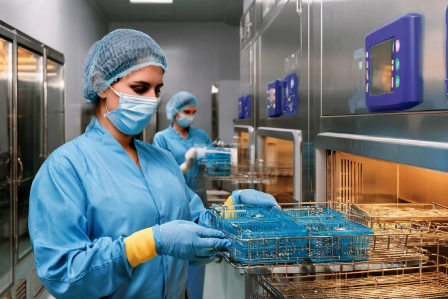
Certified Sterile Processing & Distribution CBSPD Training & Exam Preparatory Course
This program combines practical Sterile Processing & Distribution (CSSD) training with structured preparation for the CBSPD certification exam CSPDT. It is built for two journeys: professionals entering the field who want job-ready CSSD knowledge and a path to certification, and working CSSD staff who need recognized continuing-education hours and audit-ready evidence of competency.
Program deliver through live interactive sessions, it equips candidates to work confidently and safely in a Central Sterile Supply Department and to approach the certification exam fully prepared.
The CBSPD offers several certification levels spanning technician, flexible endoscope, ambulatory surgery, instrument specialist, and management roles. This course prepares candidates for the entry-level Sterile Processing & Distribution certification (CSPDT exam), administered by the CBSPD.
- Build the competency-based knowledge required to work safely and effectively in a CSSD/sterile processing environment
- Align candidate preparation with the CBSPD exam content outline across all assessed domains
- Strengthen understanding of infection prevention, decontamination, sterilization, and quality practices that protect patient safety
- Prepare candidates to approach the CBSPD certification exam with confidence
- Support continuing professional development and accreditation-readiness for CSSD teams
Professional Roles & Responsibilities
- Workplace safety and hazard awareness (chemical, sharps, biohazard, electrical, fire)
- Standard precautions and safe handling of contaminated items
- Following manufacturer instructions for use (IFUs) across all processing stages
- Department policies, incident reporting, and quality assurance
- Workflow and traffic flow to separate clean and dirty areas and prevent cross-contamination
- Loaner instrumentation handling and documentation
- Regulatory and standards awareness (AAMI, CDC, OSHA, The Joint Commission)
Microbiology & Infection Control
- Role of bacteria, viruses, fungi, spores, and prions in healthcare settings
- Biofilm formation and its impact on cleaning and sterilization
- How infections spread and how cross-transmission is prevented
- Conditions that support microbial growth
- Pathogenic organisms and their resistance to sterilization methods
Decontamination & Disinfection
- Cleaning and decontaminating instruments to remove biohazards
- Cleaning chemistry, water quality, and factors affecting cleaning effectiveness
- Ultrasonic cleaners, automated washer-disinfectors, and manual cleaning methods
- Manual cleaning of complex devices (lumens, hinged instruments)
- PPE selection, donning/doffing, and safe chemical handling
- High-level disinfection: contact time, monitoring, and documentation
- Preventing recontamination during transport to the clean area
Preparation & Packaging
- Inspecting instruments for cleanliness, damage, alignment, and function
- Assembling instrument sets and verifying correct configuration
- Packaging systems matched to the sterilization method (wraps, pouches, rigid containers)
- Placement and use of chemical indicators and integrators
- Tray loading considerations (weight, density, arrangement) to support sterilant contact
- Labeling, tamper-evident closures, and traceability
Sterilization
- Sterilization methods: steam, ethylene oxide (EtO), hydrogen peroxide, and dry heat
- Biological, chemical, and mechanical monitoring of sterilization
- Cycle parameters, sterility assurance, and troubleshooting
- Safe operation of sterilizers (loading, unloading, cooling, drying)
- Wet packs, load-quality issues, recall procedures, and corrective actions
- Recordkeeping, lot control, and load documentation
- Autoclave and equipment maintenance
Sterile Storage, Inventory & Distribution
- Proper storage techniques to maintain sterility
- Event-related sterility — maintaining package integrity until an event compromises it
- Temperature, humidity, and environmental factors affecting sterile storage
- Inventory control, rotation, and tracking
- Distribution workflows (case carts, specialty carts, urgent needs)
- Safe transport and handling of sterile items within the facility
Instrumentation
- Identification of surgical instruments and their functions
- Handling and care of reusable and disposable instruments
- Maintenance, cleaning, inspection, and approved lubrication
- Specialized instruments (robotic, minimally invasive tools)
Patient Care Equipment
- Collection and safe transport of used patient care equipment
- Disinfection and processing appropriate to the device and its IFU
- Storage and distribution practices that prevent damage and recontamination
- Tracking location and utilization per facility procedures
Professional Ethics & Conduct
- Professional conduct, integrity, teamwork, and accountability
- Reporting and escalation of safety risks and policy violations
- Patient, employee, and environmental safety responsibilities
- Supporting a culture of quality and regulatory compliance
Introduction to CSSD Management & Operations
- Overview of leading and coordinating a Central Sterile Supply Department
- Workflow optimization to improve efficiency and reduce errors
- Resource management: staffing, equipment, and inventory
- Quality control, audits, and accreditation standards
 No experience? You qualify. Completing this course makes you eligible to sit the CBSPD exam (CSPDT) no prior hospital work required.
Already working? Earn 15 CPD/CME hours that count toward your professional licence renewal (SCFHS, DHA, DOH, MOHAP, DHP).
For hospitals & managers: documented training, certification, and competency the evidence accreditation surveyors (CBAHI, JCI) look for at audit.
- Program presentation and educational materials
- CBSPD reference books
- CBSPD-style mock exam and bank of questions and answers
- Course Completion Certificate. Certificate of Professional Development (CPD), UK London
- 15 CPD / CME hours